



More than 75% of students used artificial intelligence in the 2024-2025 school year according to the “Schools’ Embrace of AI Connected to Increased Risk to Students” report by Center of Democracy and Technology. Students in Leadership have been caught using AI in their work, as a result, teachers deduct points on the assignments suspected of being AI generated.
What is AI?
The term AI is used to describe technology that is capable of mimicking human thinking. AI is capable of predicting future outcomes and detecting anomalies and similarities. Fundamental forms of AI have been around for years, but recently it has taken other forms, such as Generative AI. The existence of AI is not necessarily the problem, the constant use of AI is the trouble.
What are the environmental effects?
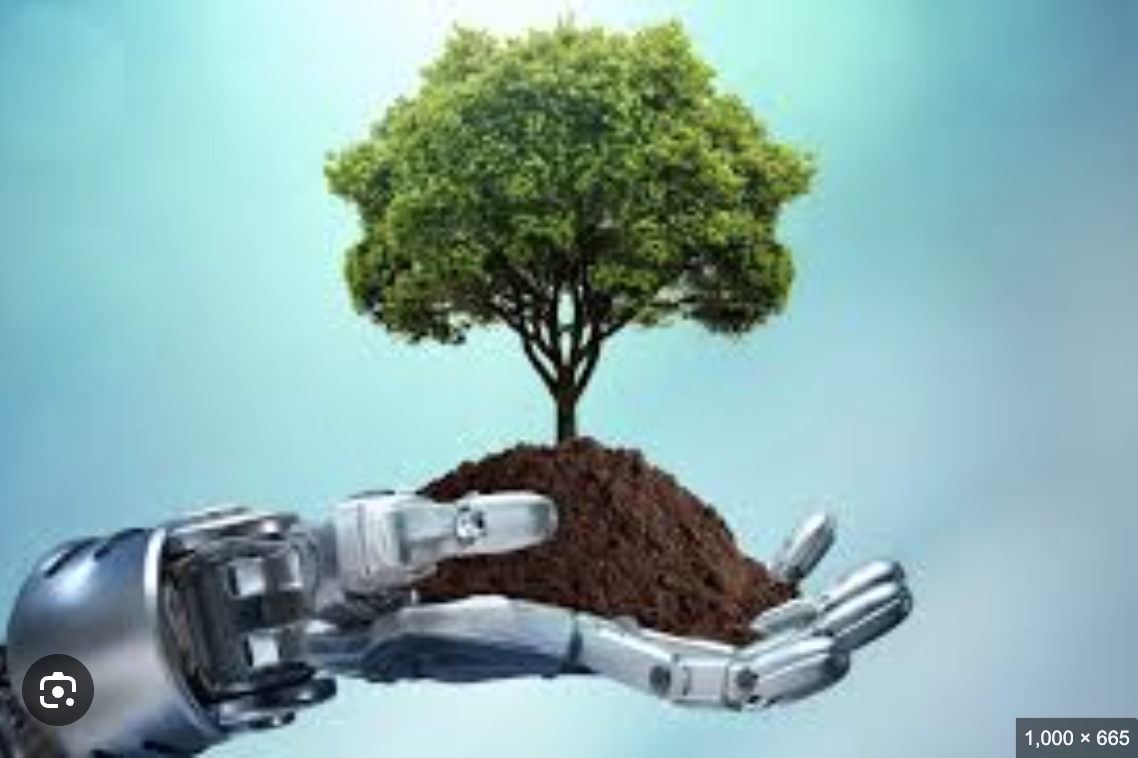
You might have heard people discussing the negative, environmental impacts Generative AI has. For example, AI taking billions of gallons of water or AI is killing the ecosystems. But how does this work? Generative AI models require training consisting of billions of parameters. To do this requires a staggering amount of electricity, increasing carbon dioxide emissions. Even after a model has been developed, the use of generative AI in people’s daily lives requires fine-tuning the AI models to rapidly improve the performance, drawing even more amounts of energy. The hardware used to train, deploy, and fine-tune these generative AI models demand large amounts of water to cool them. This can strain municipal resources and disrupt local ecosystems.
“The computational power required to train generative AI models that often have billions of parameters, such as OpenAI’s GPT-4, can demand a staggering amount of electricity, which leads to increased carbon dioxide emissions and pressures on the electric grid.”
“Our current capacity to build sustainably also cannot keep pace with the datacenter construction necessary to support Gen-AI. “
“I think AI has ruined people’s ability to think creatively. But also, many people are against the use of AI, not even because of its effects on the environment, but because of how it undermines people’s ability to do things that AI can also do.” It is true that the overuse of AI around the world has led to a decrease in peoples creative thinking ability. The original creation of AI was intended to assist humans in their work but now AI threatens to take peoples jobs.
“Economically, AI has been helpful in managing and making things more efficient. People are able to work on other things that AI can’t do. Ultimately, people are making more money from using AI. “
AI Alternatives
There are substitutes for ChatGPT and other AI resources, such as: Ecosia, which uses smaller and faster AI models, delivering accurate answers from reliable sources while using less energy, and uses 100% of its profits for climate action, and OceanHero, which recovers ocean-bound plastics when people browse the web. But if you’re feeling attached to your Google search engine then try Startpage, similar to Google’s search technology without user tracking, targeted ads, or third-party cookies. Schools that embrace the use of AI for teaching special needs students are being discussed. Although, what could a school of generative AI teachers give that a school full of devoted, motivated teachers can’t, besides environmental decline?